Monday, October 25, 2021

PHILOSOPHY OF KRIS PANDAWA LARE IN THE MUSEUM OF HISTORY OF JAVA


Each museum has a diverse collection of historical relics. It is one of the hallmarks of an established museum. With a variety of collections in a museum, this reflects the character of the museum itself. The aim is to distinguish one museum from another because there are many types of museums in Indonesia.


The History of Java Museum is one of the museums with its character, namely, historical character. Here more precisely, concerns the history of the island of Java. There are lots of historical collections on display at the History of Java Museum. One of them is the collection of Pandawa Lare kris.


Pandawa Lare


This historical object is one of the kris collections in the History of Java Museum. Pandawa Lare kris has an interesting historical story. The Pandawa Lare keris is a form of dhapur luk five kris; the length of the blade is medium. This kris is a relic of the Mataram kingdom of Kertosono. The philosophy of the Pandawa Lare kris is to tell the story of the life of the Pandawa family who must undergo exile.


It is said that the ancestors used this kris for those who were guiding knowledge. This kris is one of the rare and difficult to obtain kris. This Pandawa Lare Heritage Kris of the Mataram Kingdom can be owned by Heirloom Kris Fans, who prioritize the benefits and magical contents.


Pandawa Lare

The Pandawa Lare kris can also be owned by cultural preservation activist Tosan Aji who prioritizes the Beauty of Antiques of the National Heritage that should be preserved and protected to preserve Indonesian Cultural Heritage.


Very interesting and adds to our insight about the historical background of this Pandawa Lare kris. In addition to the Pandawa Lare kris, there are many other types of kris in the History of Java Museum because the History of Java Museum collects many other historical items related to the island of Java.
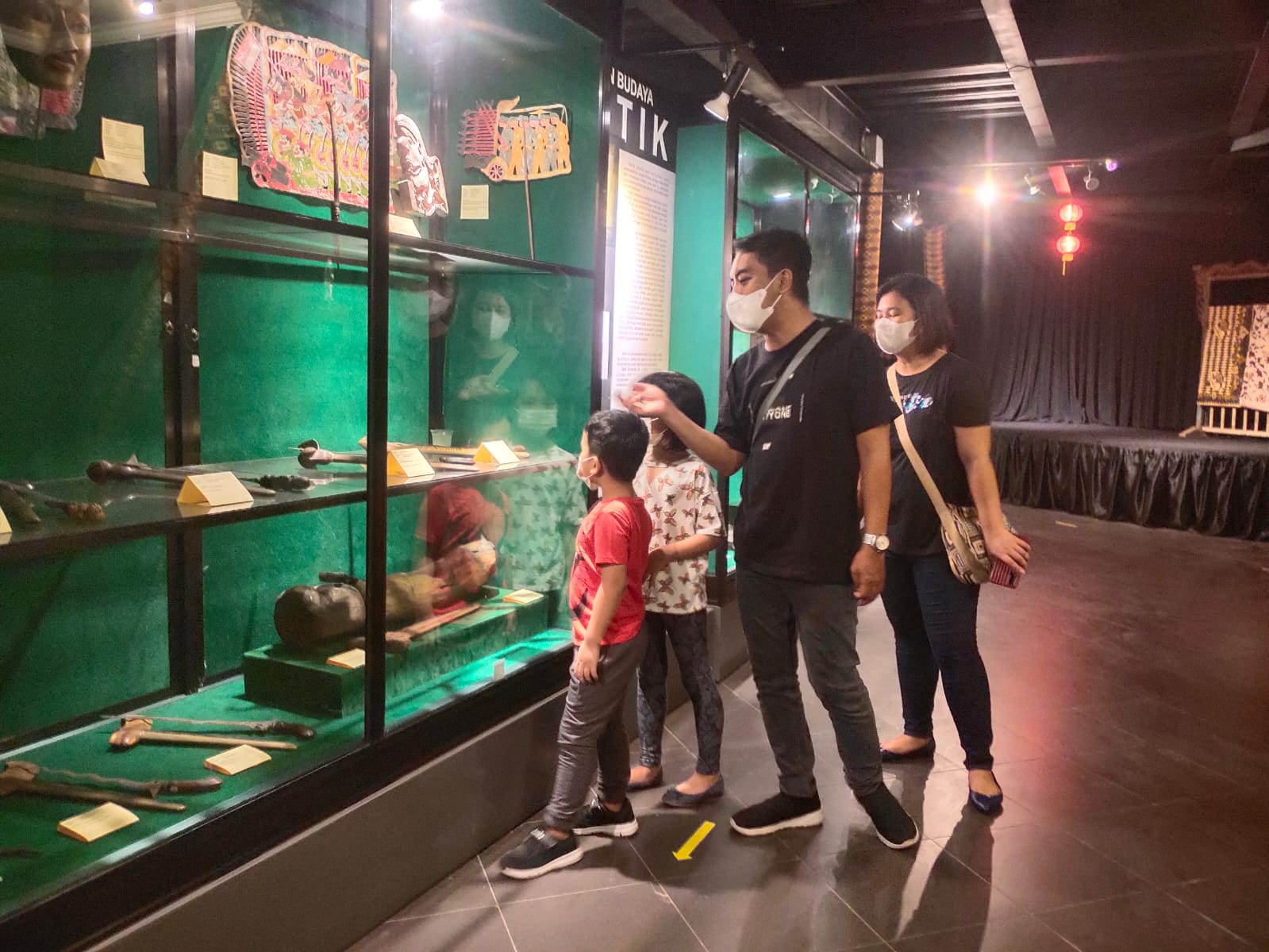


History Of Java Museum

Information & Reservation Center


W.a C.s.0857.4822.8300 

The Heritage of Arabic Calligraphy Incense Burner at History of Java Museum


A museum is a place where a lot of historical collections are kept in intact and well-maintained conditions. This is one of the attractions for visitors when visiting a museum. Visitors can gain new knowledge as well as see what the object looks like.


As we know that each museum is about an event that has happened in their country. This was also carried out at the History of Java Museum Yogyakarta, which raised an incident about the origin of the formation of the island of Java and early humans. This is what distinguishes the History of Java Museum Yogyakarta from other museums.


By highlighting the events of the formation of the island of Java, this museum tells the story from beginning to end and is equipped with relics of historical objects. One of these relics is an incense burner with Arabic calligraphy motifs originating during the Islamic Mataram era. It was derived from bronze and was found in Central Java in the 16th century.


There are two types of incense burners with Arabic calligraphy motifs. The striking difference is in its shape; namely, the incense burner is legless and has legs. This incense burner is decorated with Arabic calligraphy, which is an Islamic prayer. The calligraphy writing is the monotheism reading "Laila hailallah muhammada Rasullullah" which means Allah's messenger.


We can know much more about the history of the Arabic Calligraphy Incense Burner when we visit the History of Java Museum Yogyakarta. This museum is supported by advances in IT technology which adds a new impression when you visit the History of Java Museum Yogyakarta. So, your museum visit will feel very interesting and fun.


History Of Java Museum

Information & Reservation Center


W.a C.s.0857.4822.8300 


JEPAPLOK BECOME ONE OF THE ART ARTEFACTS AT THE HISTORY OF JAVA MUSEUM


Yogyakarta has become one of the places often visited for vacations with family, friends, or even a couple. One of the must-visit tourist destinations while in Yogyakarta is the History of Java Museum. By taking the time to visit the museum, you can remember historical events in Indonesia. This museum is located at Jl. Parangtritis Km 5.5 Bangunharjo Sewon, Bantul, Yogyakarta.


The History of Java Museum has four rooms: the theatre room, the collection room, the 3D room, and the diorama room. Each room has a different function so that visitors do not feel bored when in the museum. There are so many historical relics in the History of Java Museum. These relics are a reflection of the events of how Javanese society formed.


What is Jepaplok?


Jepaplok


One of the art artifacts in the History of Java Museum is Jepaplok. Jepaplok is the name of a dance group with a dragon head motif involving nine female dancers. The word Jepaplok comes from the words Njeplak (open quickly) and Nyaplok (to annex). The origin of this dance is from the interest of the choreographer when watching a traditional dance that uses a leathered horse performance in Tulungagung, East Java. 


Jepaplok, depicts a mythological animal in the form of a dragon, which is illustrated as the evil ruler of the forest. This dance does not create a story and consists of four parts. People's beliefs about the Dragon Dina, barong, or dragon should be seen as animals that bring disaster to humans and be seen as helpers and protectors for humans.


In the show, the dancers play a giant mask resembling a dragon's head. The mask is made in such a way as to symbolize the evil character (bully), and on the mask, the mouth can be opened and closed by holding the wooden protrusion behind the mask. The opening and closing of the mask, when played, creates a "plok-plok-plok" sound, so many people call it "Caplokan."


Not only Jejaplok art artifacts that are in the History of Java Museum. You can also see other historical relics in the History of Java Museum, such as puppets, kris, hand cannon weapons, and many more. You can also take pictures in the diorama room, a place for selfie photos with 3D facilities, making your photos very interesting and a good spot for taking a photo.


History Of Java Museum

Information & Reservation Center


W.a C.s.0857.4822.8300


Getting to Know One of the Masterpiece Relics from the Majapahit Kingdom at the History of Java Museum


When you enter the Majapahit hall, a pataka's shape is still intact from the 13th century. The patch is in the shape of a trident with a dragon headdress. This pataka is a relic of the Singhasari kingdom, passed on to the Majapahit kingdom.


This pataka from the Majapahit Kingdom is a Pataka Nagari as the embodiment of the twin dragons. This pataka was made in the era of the Singhasari Kingdom in the 12th to 13th centuries AD, and inherited by the Majapahit Kingdom.


This 
pataka is in the form of a spear, which is made of copper. And according to some sources, this pataka was saved when the Singhasari Kingdom collapsed during the Bracelets Kingdom war.


Kusumo describes the Pataka Sang Dwija Naga Nareswara in the form of a pataka Nagari as the embodiment of the tirta amerta twin dragons. This pataka is from the period of the Singhasari Kingdom from the XII to the XIII century AD. This pataka was then passed on to the Majapahit Kingdom after being saved by Sang Rama Wijaya when the Singasari Kingdom collapsed. While the Pataka Sang Hyang Baruna in the form of a spear from the XII to XIII centuries AD.


The cultural observer from Solo said that this Mahapahit heritage plaque is usually attached to the top of the leader's ship or that represents the royal expedition group. While the Pataka of Sang Padmanaba Wiranagari is in the form of a spear, this is the Pataka of Sang Padmanaba Wiranagari.


This is the first time the symbol of the Wilwatikta Majapahit Kingdom was attached to the spear pataka. This pataka was previously brought by Jayakatwang Kediri but was reclaimed by Senopati Singasari during the Pamalayu expedition. Finally, Pataka Sang Hyang Naga Amawabhumi is in the form of a dragon spear, which means the dragon guardian of justice.


History Of Java Museum

Information & Reservation Center


W.a C.s.0857.4822.8300 

Relics of Traditional Musical Instruments from Noble Families at the History of Java Museum


Musical instruments are also one of the collections in the History of Java Museum Yogyakarta. So, not only historical relics such as statues, puppets, Kris, etc. Here we also have some relics of historical musical instruments that are no less interesting than their historical stories.


One of the musical instruments in the History of Java Museum Yogyakarta is the Rebab musical instrument. You must be familiar when you hear the rebab instrument. Here we will get to know more about the history of the rebab instrument in the History of Java Museum Yogyakarta. Rebab was discovered in the 19th century in Banten, West Java. Instrument's of rebab are made of ivory, wood, coconut, shell, and leather.


Getting to know The Historical of Rebab


At first, rebab became famous in Cordoba to western Europe in the 8th century. Then it continued to develop into Cello and Violin. Along with the times, this musical instrument entered the archipelago through Turkish and Central Asian traders to Persia.


We often hear this musical instrument in Betawi art, which accompanies wayang kulit performances. In Javanese art, rebab is part of the gamelan used as an accompaniment of the sinden’s song.


In addition, rebab's instrument is from a noble family in Java. Equipped with two-legged support in the form of a dragon carving and the swipe is a decoration with a dog pattern, dragon head, and tail. Its placement is on the side of the seat.


There are things that must be maintained and considered properly when making rebab, so that the resulting sound quality is good. We also need to realize that today's young generation needs to maintain and preserve traditional objects, so they don't become extinct. In the History of Java Museum, Yogyakarta is also one of the favorite tourist attractions for young people. It is not only a nature tour, but a trip to the museum is also an exciting thing and adds new insights for young people.


History Of Java Museum

Information & Reservation Center


W.a C.s.0857.4822.8300 

Saturday, October 23, 2021

Relics of The Javanese Traditional Calender “Pranata Mangsa” at History of Java Museum

The traditional Javanese calendar or commonly called “Pranata Mangsa” is one of the objects used by our ancestors in ancient times. You can find these historical objects at the History of Java Museum, Yogyakarta. This historical calendar is made from wood. It has been found in Cirebon, West Java, since the 19th century.  


Getting to Know the Philosophy of “Pranata Mangsa”


The meaning of the word “Pranata Mangasa” comes from “Pranata,” which means rules, and “Mangsa” means season. So, the Javanese calendar or commonly called “Pranata Mangsa,” is used as a delayer for the season and determines the calculation of the day in Javanese, regulates the work procedures of farmers, and knows the seasons of the turn of the year.  


Pranata Mangsa/Traditional Javanese Calender


This understanding of the Javanese calendar is also known by other tribes in Indonesia, including the Sundanese and Balinese. The Javanese calendar, or "Pranata Mangsa," was pioneered by Pakubuwono VII on June 22, 1856. The Pranata Mangsa calendar is based on calculating the earth's journey during the revolution orbiting the sun. In addition, the Pranata Mangsa calendar recognizes leap years and basithah, which means long and short life of each Javanese year.


The Example of calendar on “Pranata Mangsa” Calendar


Before the Javanese calendar or "Pranata Mangsa," people used the Hindu Saka calendar system based on the sun's movement. Then in 1933 century, Sri Sultan Agung Prabu Hanyokrokusumo changed the sun calendar system to the hijriah calendar. It is applied to the islands of Java and Madura, except for Banten, Batavia, and Banyuwangi.


Of course, there is more information that we can find about the Javanese calendar or Pranata Mangsa if you visit the History of Java Museum Yogyakarta. Not only getting the history of the objects but also feeling other things because, at the History of Java Museum Yogyakarta, there is a 3D room and a modern photo spot.


History Of Java Museum

Information & Reservation Center


W.a C.s.0857.4822.8300 
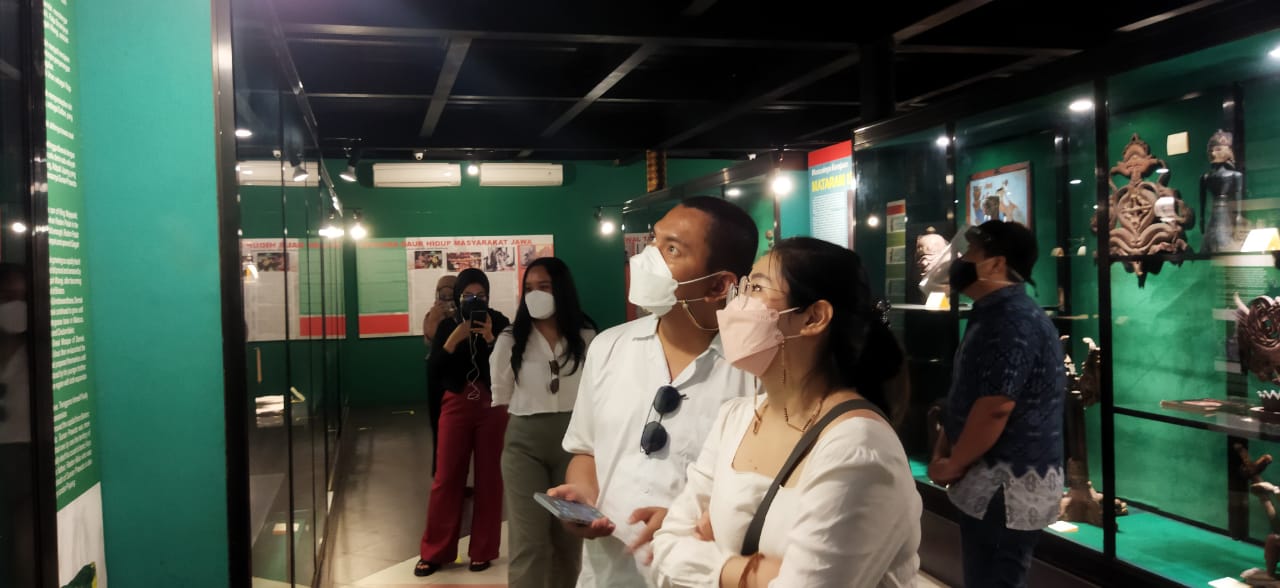

Sunday, October 3, 2021

THE LEGACY OF SURAKARTA'S WAYANG PURWA AT THE MUSEUM HISTORY OF JAVA

Art is one of the historical relics that are found in almost every area. There are many regions and tribes scattered in Indonesia. Therefore, each region has different art, and that is the character of the region. The History of Java Museum also has its character with historical relics related to the formation of the island of Java.

Getting to Know the Historical Relics of Wayang Purwa Surakarta


Semar


Wayang is one of the historical relics in the History of Java Museum. One of them is a puppet relic found in Central Java in the 19th-20th centuries, namely the Wayang Purwa Surakarta. Semar is one of the relics of Wayang Purwa Surakarta. Semar is the oldest Punakawan figure who acts as a caregiver for the Knights. More precisely, he is the strongest god and is the elder brother of the Batara Guru.


Btara Guru

In addition to the Semar, there is a so-called Btara Guru. This Btara Guru is the leader of the gods in heaven, although he is not the highest god of knowledge and magic. But he was leading his brother, Ismaya, who chose to be incarnated as Semar.      


Petruk


Gareng

Petruk and Gareng also include historical relics from the Wayang Purwa Surakarta. This Petruk is one of the Punakawan who accompanies the Knights in the Mahabharata story. Meanwhile, Gareng was one of the Punakawan visitors who attended the good-natured knights.

The collection of puppets above are only some of the dozens of types of wayang on display at the History of Java Museum. However, there are not only wayang, but there are also other historical objects in the History of Java Museum. You can take a vacation and get new things about the formation of the island of Java in this museum.


History Of Java Museum

Information & Reservation Center


W.a C.s.0857.4822.8300 


Getting to know Jodang as a Historic Collection at the History of Java Museum

  Have you ever heard the word "Jodang"? Some of the Javanese people may have heard the word. Jodang is one of the historical rel...